Mission
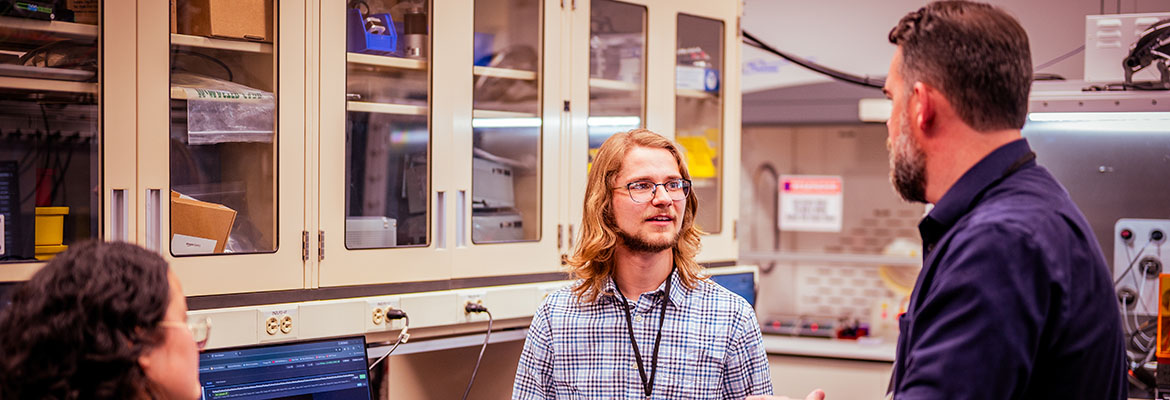
The Arkansas Materials Institute advances the future of materials science and engineering by fostering interdisciplinary education, cutting-edge research, and world-class facilities. As a vital contributor to the University of Arkansas’s mission, the Institute provides transformative educational experiences, cultivates innovation, and strengthens the STEM workforce. Through collaboration among students, faculty, and industry partners, we translate foundational materials discovery into real-world solutions that address global challenges bringing impactful research to Arkansas and the world.
Vision
To shape a future where interdisciplinary materials innovation fuels discovery, transforms education, and enables sustainable solutions to the world’s most pressing challenges, positioning Arkansas as a global driver of materials advancement.
History
Arkansas Materials Institute facilities offer state-of-the-art instrumentation supported by expert staff who provide training in fabrication, processing, instrument operation, and analysis.
Before the Institute
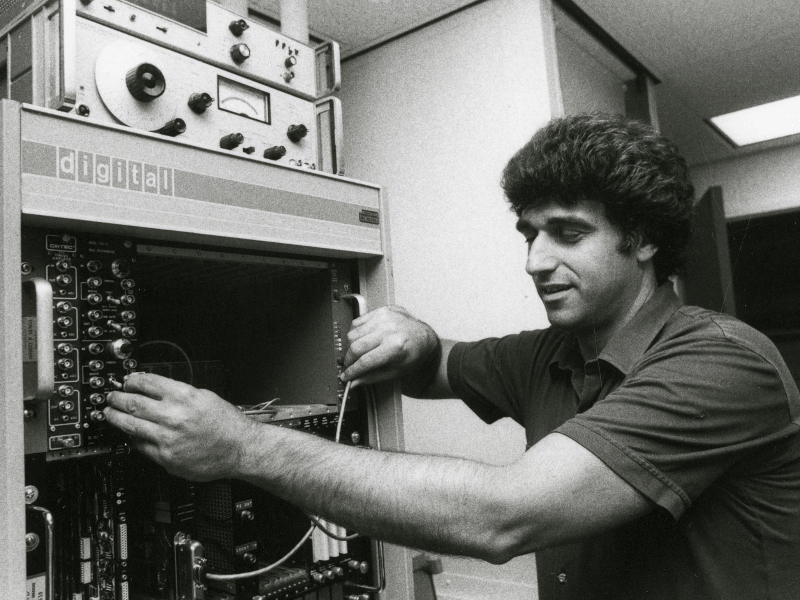
A materials focused graduate program began as the Microelectronics-Photonics graduate program, launched in 1998 by Professors Greg Salamo and Ken Vickers through NSF-funded ACEMI (MS) and IGERT (PhD) initiatives. This graduate program would later be expanded into the materials science and engineering graduate program in Spring 2020.
NANO Building
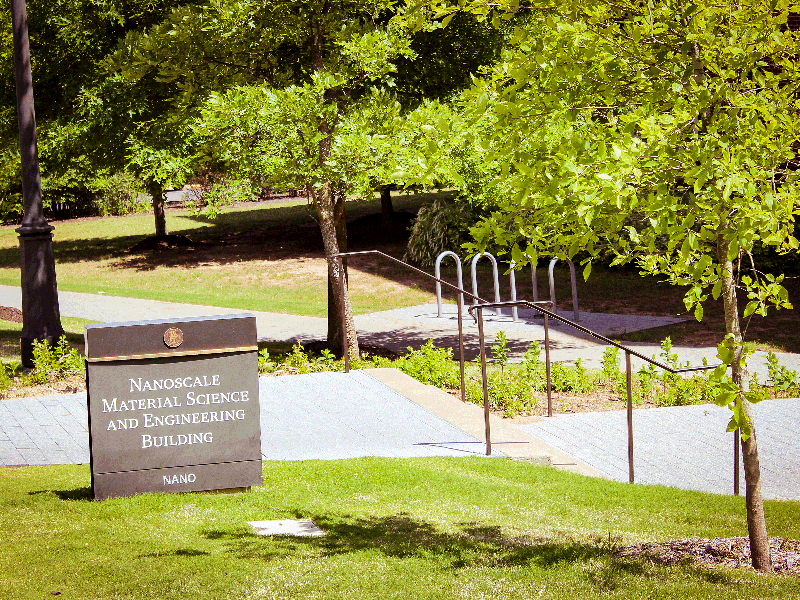
In 2011, with generous support from the state of Arkansas and the University of Arkansas, the Nanoscale Materials Science and Engineering Building was established, creating a centralized home for the institute’s extensive suite of advanced research and fabrication facilities.
Arkansas Materials Institute
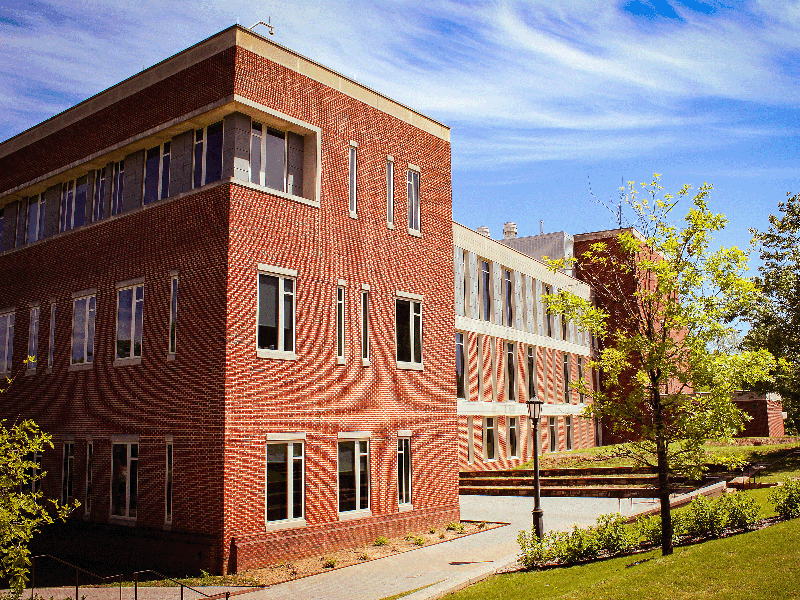
University of Arkansas materials science and engineering faculty Gregory Salamo, Hugh Churchill, Morgan Ware, Fisher Yu, and Julia Kohanek collaboratively proposed the integration of the Institute for Nanoscience and Engineering with the Materials Science and Engineering graduate program. The Arkansas Materials Institute was approved in summer 2026.
Our Researchers
- Kartik Balachandran
- Salvador Barraza-Lopez
- Laurent Bellaiche
- Mourad Benamara
- Sakineh Chabi
- Jingyi Chen
- Hugh Churchill
- Robert Coridan
- Jia Di
- Jeff Dix
- Bin Dong
- Wei Du
- Martin Edwards
- Magda El-Shenawee
- Ingrid Fritsch
- Huaxiang Fu
- Julio Gea-Banacloche
- Lei Guo
- Maggie He
- Colin Heyes
- Han Hu
- Jin Hu
- David Huitink
- Jeongmin Hwang
- Morten Jensen
- Jin-Woo Kim
- Julia Kohanek
- Pradeep Kumar
- Jiali Li
- Bothina Manasreh
- Omar Manasreh
- Alan Mantooth
- Yuriy Mazur
- Michael McGraw
- Roy McCann
- Xiangbo Meng
- Paul Millett
- Hyunjin Moon
- Mahmoud Moradi
- Timothy Muldoon
- Hiro Nakamura
- Hameed Naseem
- William Oliver
- Charles Paillard
- Errol Porter
- Narasimhan Rajaram
- Panneer Selvam
- Woodrow Shew
- Wan Shou
- Surendra Singh
- Younghye Song
- Julie Stenken
- Susanne Striegler
- Suresh Thallapuranam
- Ryan Tian
- Steve Tung
- Keisha Walters
- Feng Wang
- Yong Wang
- Morgan Ware
- Uche Wejinya
- Ranil Wickramasinghe
- Kei Yazawa
- Fisher Yu
- Wenchao Zhou
- Min Zou
- Emeritus: Gregory Salamo